Key Elements – Click here for Keys to an Effective Team form.
Factors contributing to effective team functioning include expectations for participation, team members’ accountability, clear communication, and predictability. To gain more of an understanding of these key elements needed for effective team functioning, look at the definitions and descriptions of how these operate within a team.
- Participation – Team member involvement.
- Accountability—Member responsibilities.
- Predictability–Structures and processes that provide consistency and eliminate surprises.
- Communication–Sharing of messages and news from the team.
Participation:
Active participation is essential for any successful team functioning. At least 75% of the members should be present and engaged in all meetings. Norms are followed at each meeting.
All team members are encouraged to join in the conversation, share ideas, and offer constructive feedback. If someone is silent, it is a good idea for the leader to ask him/her their opinion after some discussion. All voices are encouraged. It is also important that no one in the group dominates the discussion.
Accountability
All team members need to come to meetings prepared and they need to complete all their responsibilities. Leadership is responsible for developing an agenda and having some record of the team decisions.
Click here to get a sample copy of a meeting agenda and meeting notes format.
Evaluation is another part of accountability. There needs to be a regular assessment of the team process, the team member roles, and outcomes. The team can be accountable to the organization by reviewing data, monitoring all their activities, and documenting progress toward meeting goals
Click here for Team Evaluation Form [insert].
Predictability
Initially, meetings need to happen at least every 2 weeks to establish the team, mission, charter, and data collection. As the team moves into collecting data, meetings should be scheduled at least monthly. In fact, it is a good idea to have a meeting calendar that covers a semester or even a whole year, so people can schedule meeting times on their calendar and avoid time/meeting conflicts. There is a place on the Team Charter to note meeting dates.
Meetings should be held even in the leader or facilitator’s absence, and therefore it is important to have an organization form that identifies a backup person for each role. The meetings should start and end on time, and again, the next meeting should be scheduled before the end of the current meeting. In terms of roles, responsibilities, and expectations, each should be defined as previously discussed.
There also needs to be an agenda, which is distributed in advance and used to guide the meeting. It is important that meeting minutes/notes are taken and shared.
A process needs to be in place for team members to add or correct the minutes. The team needs to decide who besides team members will receive the meeting minutes. Those to be considered are administrators, faculty, staff, or other stakeholders. The team could decide not to share minutes and identify other means for sharing the activities of the team, such as reporting at a faculty meeting or providing a summary in a newsletter.
There also needs to be a status check on objectives and activities. There is a tendency sometimes to focus on one objective or one activity and not look at the whole range of prevention activities being implemented on-site.
Internal and External Communication:
The fourth key element for effective team functioning is communication. Communication in high-performing teams encompasses a broad range of formal and informal ways for people to exchange ideas and information. The underlying theme is that all communication is open and honest. It speaks about how the team members communicate with each other, with the leadership, and with the rest of the school staff and other stakeholders.
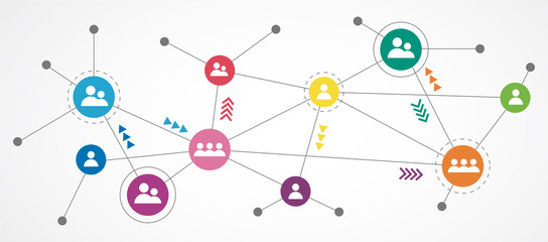
Communication on a regular basis maintains support for activities, offers the opportunity for feedback, and helps identify potential problems. To maintain support for the Comprehensive School Safety Plan, it is critical that all staff have regular information about the safety plan activities.
The team needs to establish regular channels of communication about prevention goals, activities, and progress in meeting goals with all stakeholders to keep the school community informed of the prevention activities and to gain support for them. Some teams have used short presentations at all staff meetings, newsletters, bulletin boards, blogs, websites, and newspaper articles.
Click here for Team Functioning Checklist. {insert}
Discussion Reflection Questions
Here are some questions to consider:
- Are there other points about participation on a team that someone would like to add?
- Are there other points about accountability that someone would like to add?
- Are there other points about predictability that someone would like to add?
- Are there other points about communication that someone would like to add?
Part 1: Forming an Effective Leadership Action Team
- A. Why is Leadership Important?
- B. Team Development Framework
- C. Team Leadership
- D. Team Mission and Goals
Part 2: Team Membership, Recruitment, and Roles
Part 3: Team Functioning
- A. Team Norms
- B. Supporting Team Members
- C. Team Building
- D. Stages in Team Development
Part 4: Team Building
 schoolsafetyinitiatives.org